Visiting Shrewsbury’s Venus Pools Nature Reserve
The Venus Pools Nature Reserve has been on my to visit list for more than a year, so what better way to end 2025 and start 2026, than to visit for the first time.
The pools are located just outside Shrewsbury, and are run by the Shropshire Ornithological Society, or SOS for short. The site is about 66 acres and, along with the pool and it’s islands, also consists of an arable field that is planted with wildflowers. There are 5 hides around the site, though 2 of them are for members only (hides 1 and 4 on the map).
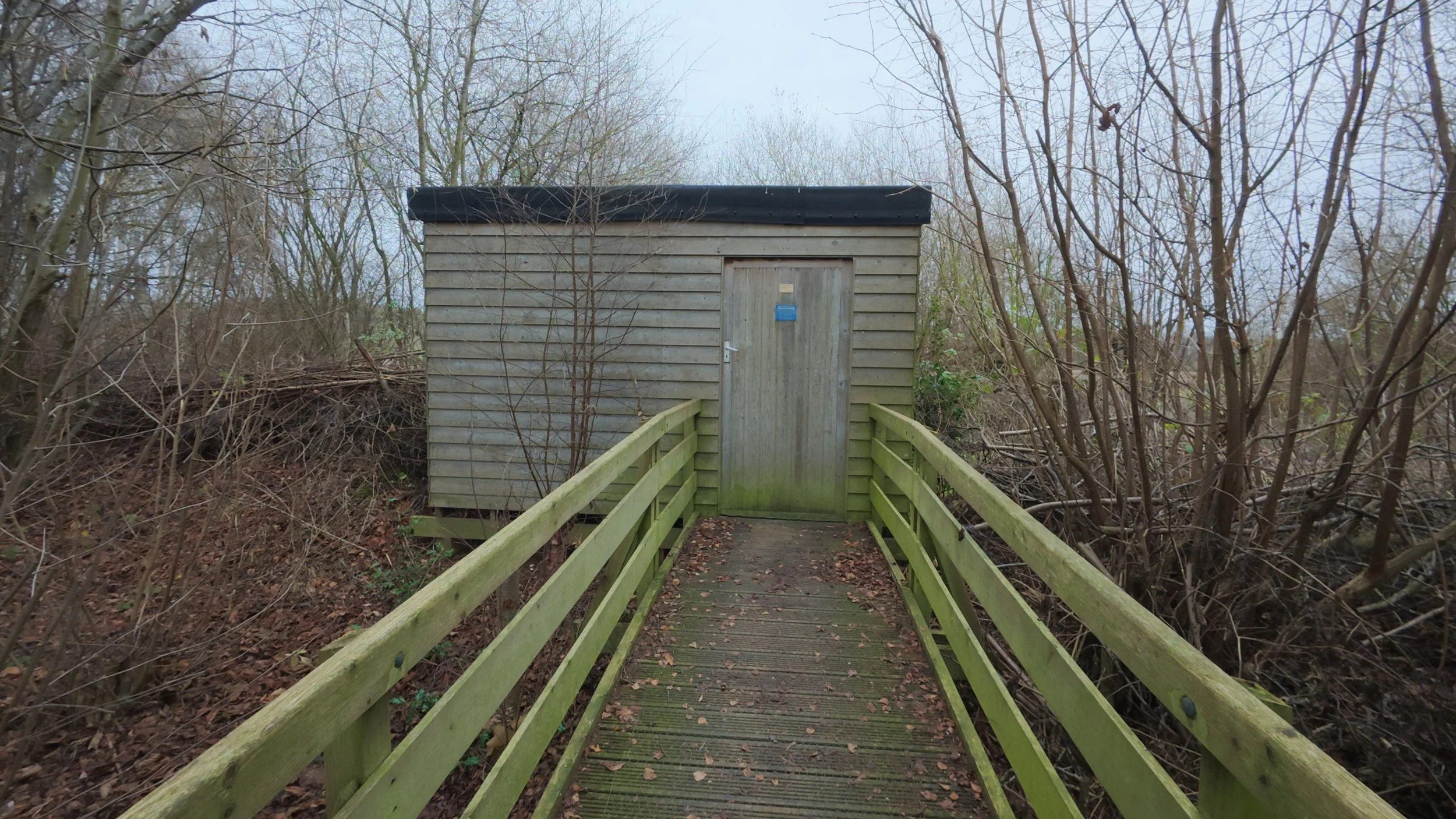
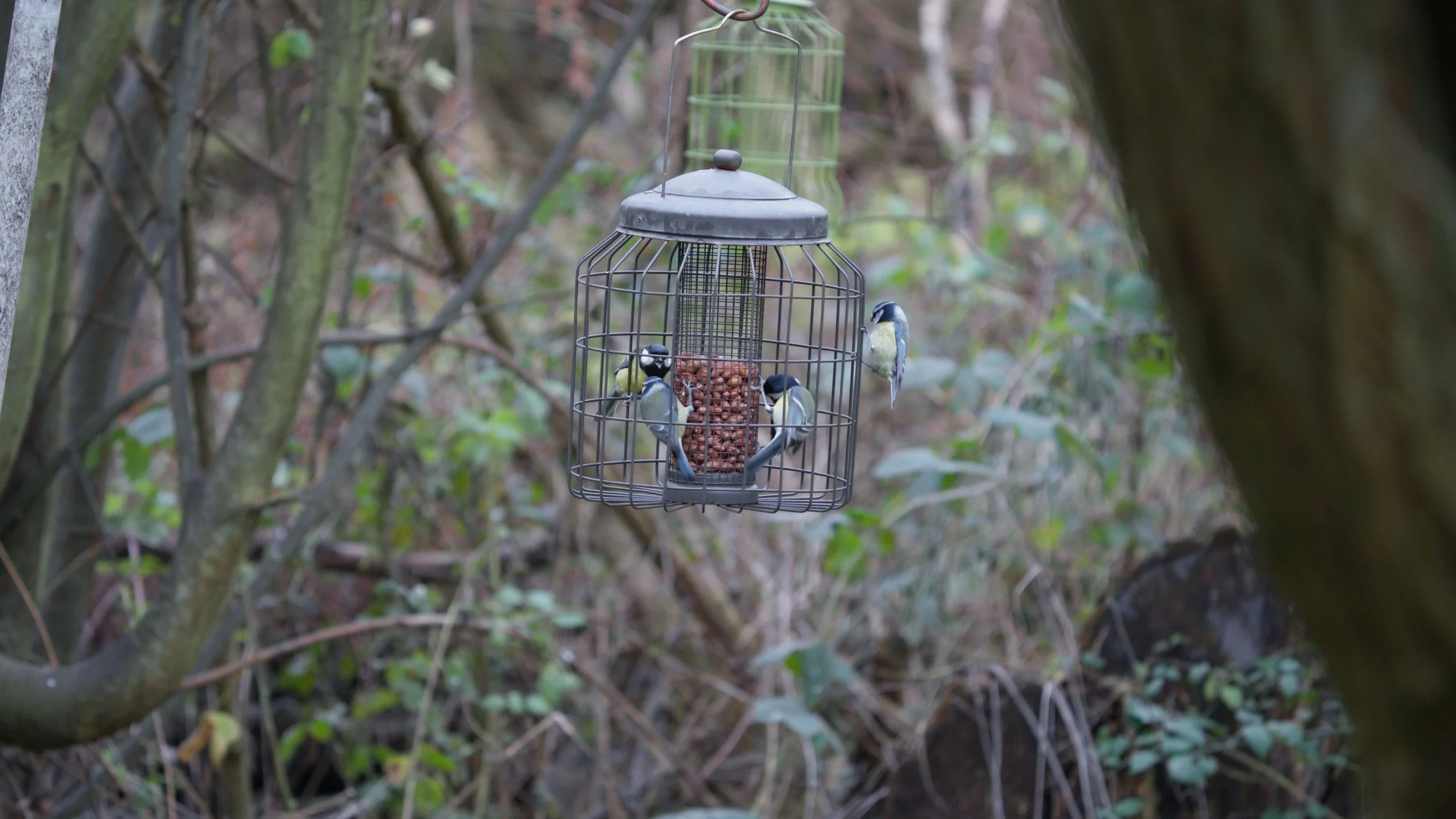
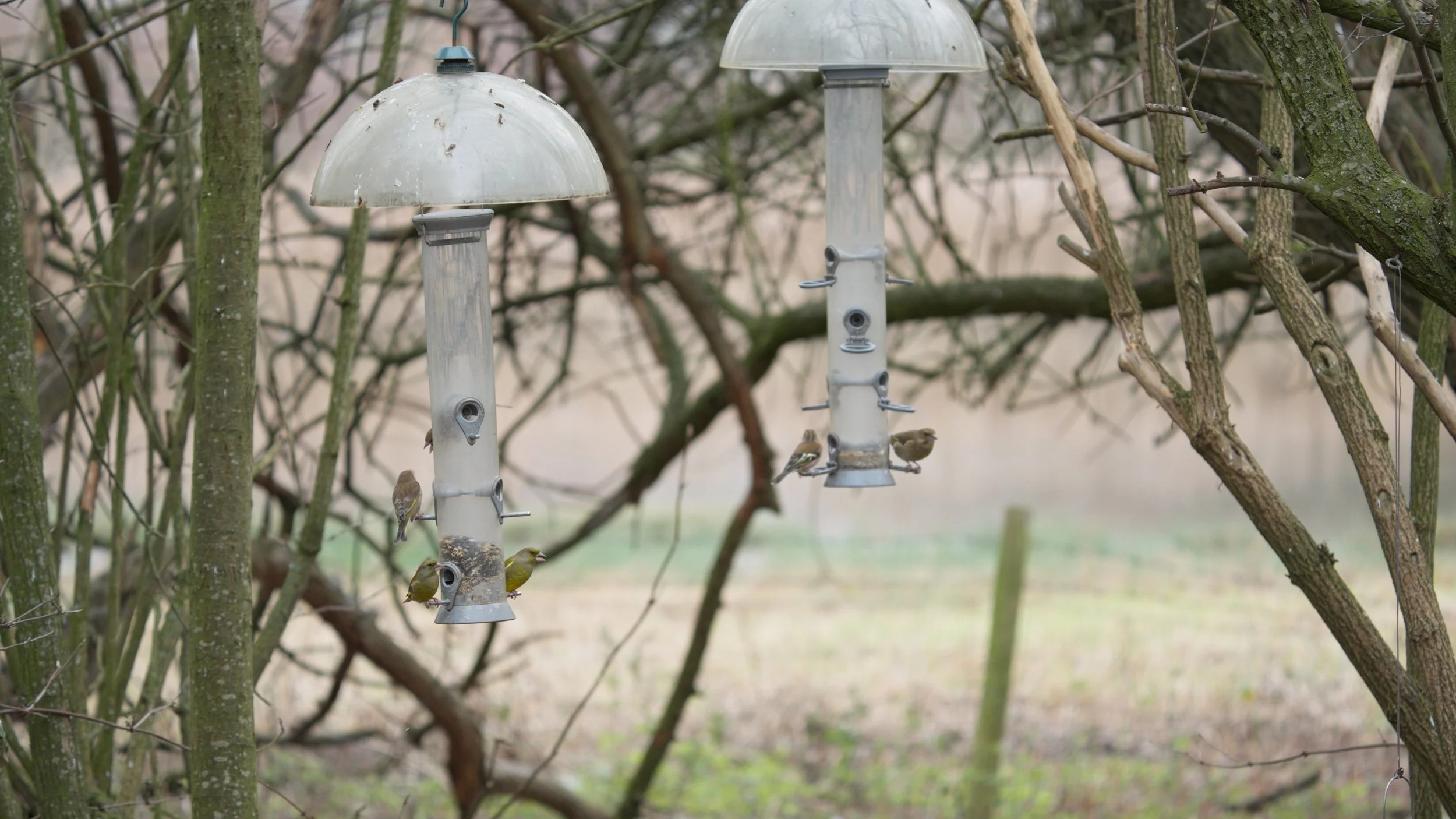
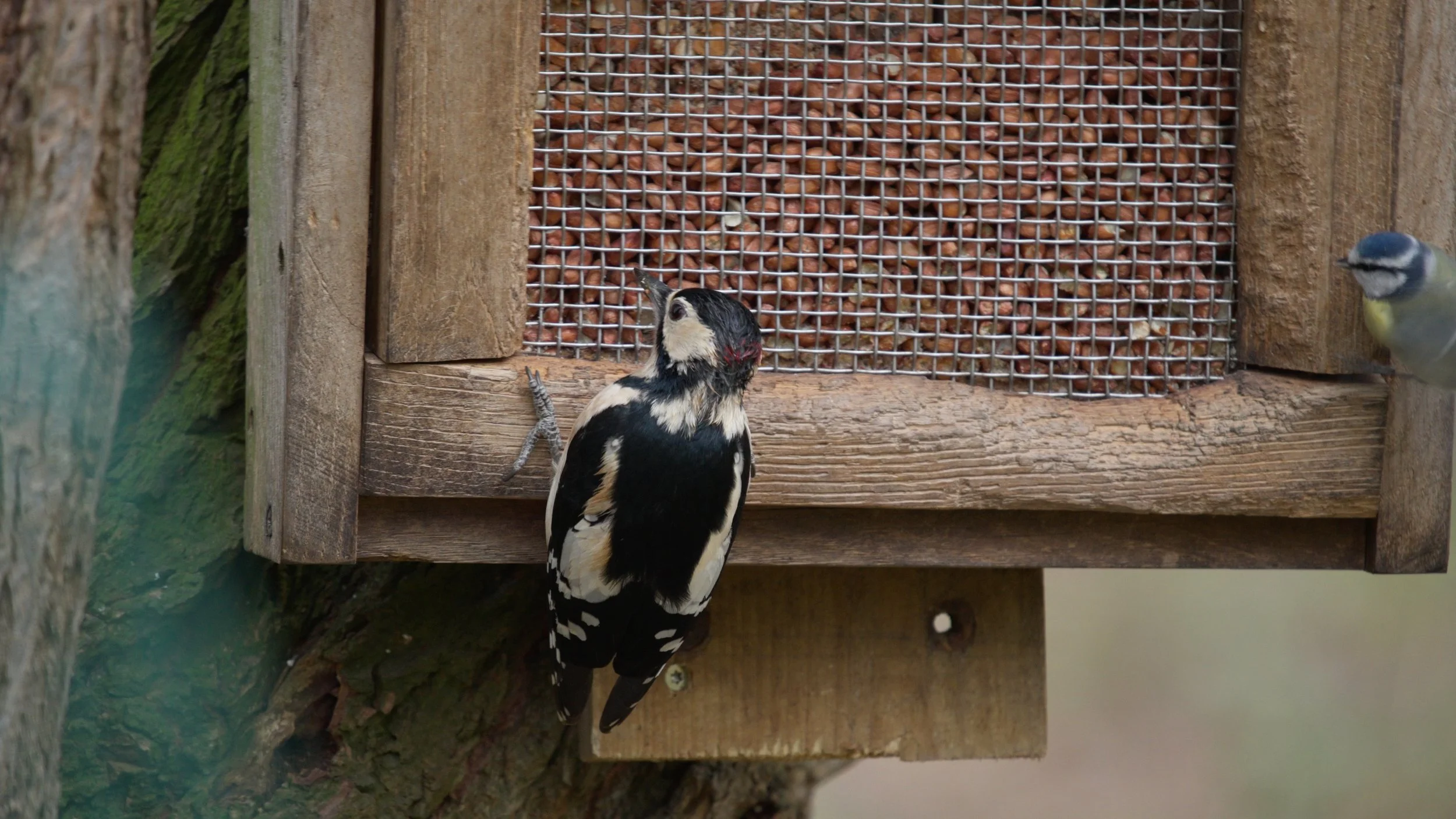
Once I had arrived, I set off to Lena’s Hide (hide 2 on the map). This is a woodland hide that is based around a feeding station, so I was hopeful to get some images of the woodland birds here. In the hide, I set up my beanbag and tried to find a perch that I could aim my camera at and wait for the birds to stop there. This proved to be a bit difficult as the choice of perches was 0, and the birds were hopping from deep woodland trees straight onto the feeders without really stopping anywhere. While it was amazing to see so many birds here, they were all ones that I am very lucky to have visit my garden set up. I stayed in the hide for a while, and met a local tog, Phil (you can check him out on Instagram here). He gave me a load of information as to what I could expect to see at the site as well as where they should be, which was incredibly helpful.
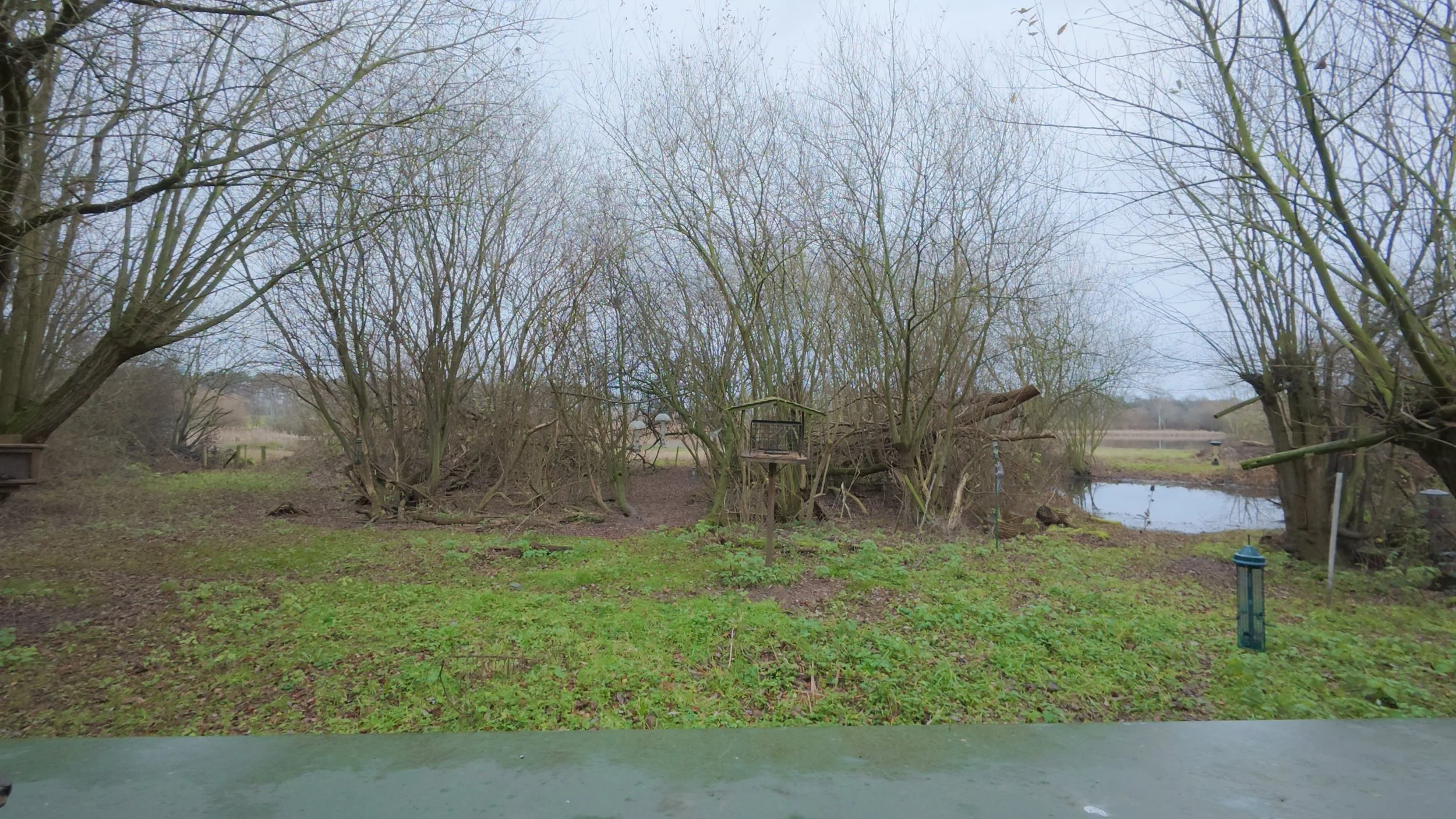
After a while and with no photos as yet, I left Lena’s Hide and headed over to the Main hide, to see what was on the pond. This is the busiest hide, but there is lots of space to sit and view the wildlife. There was a massive flock of Lapwings which was amazing to see, as well as a couple of Cormorants, Teal, Wigeon and an Egyptian Goose.
On the lead up to my visit, I was scouring the internet to see what visitors I could expect to see and try and get an idea for what images I could create. I used eBird, which gave an extensive list of what had been seen in December, as well as looking for facebook and Instagram posts. The downside to this was, that I feel it gave me a false sense of what the reality would be, as the birds were much further out that what I was hoping, so I think a lot of the images I did see may have been heavily cropped to show online.
With the birds staying out on the pond, I decided to try my luck in the arable fields, as this was where Phil said I would likely see the resident Kestrels.
One thing I noticed, was that the site, doesn’t really have the best signage, so I was just following around where it looked like there’d been a lot of footfall, as well as consulting the site map I got from the SOS website.
There were lots of finches in the arable field, but they were sticking to the deep hedges round the edges or were well into the seeds in the field. At this point, it was starting to feel like my usual solo trips, where despite my best efforts at planning, I end up not seeing anything to photograph – thinking of you Whixall Moss….
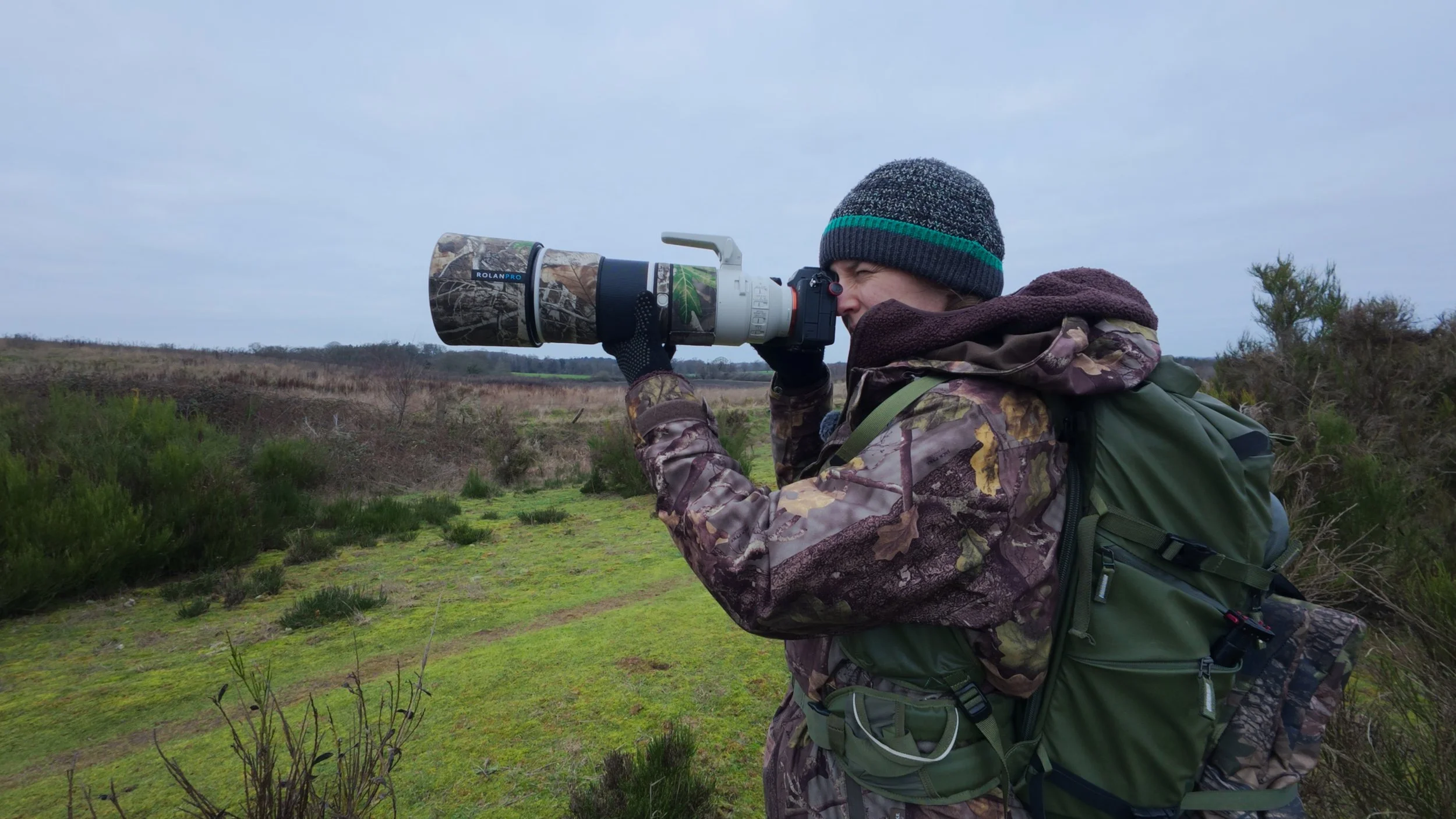
At the top edge of the field, the area backs onto a former quarry site, as I was talking to camera along this part of my little outing, a Kestrel flew pretty much right in front of me a landed on a fence post no more than 30 meters away! I froze and put my camera down, so I could try my best at getting an image of this beautiful bird. The fence line it was on, was surrounded by very long grass, which obscured my view of the bird and made focusing impossible, I crouched down and tried to get a clearer view of the kestrel and sort of managed to get an image of it, though I wouldn’t call it a keeper image.
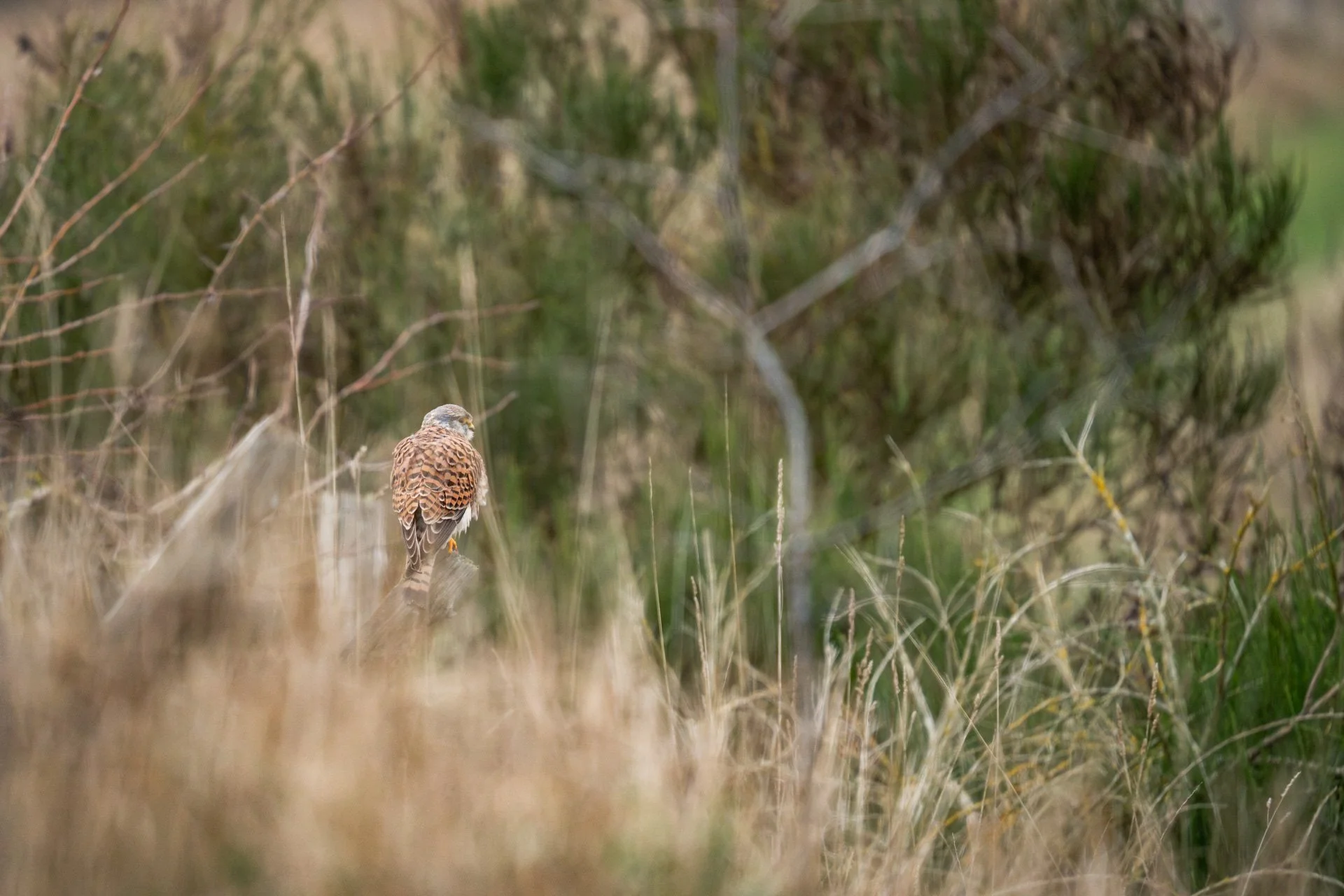
This was an amazing experience, and after it flew off, I decided to stick around and see if it would come back. I sat up with my back to some trees, further back from where it had landed, and hoped. I could see it across the way, sitting at the top of a silver birch tree, while I waited, I took the opportunity to have some lunch. During that time, the kestrel moved on and unfortunately, I didn’t see what direction it headed off in, so I gathered my stuff back up and continued on my walk around the field.
My next stop off was at the Fen Hide (hide 5 on the map), my walk took me past an old oak tree with an owl box fitted to it, though it was just a pair of squirrels chasing each other that I saw here.
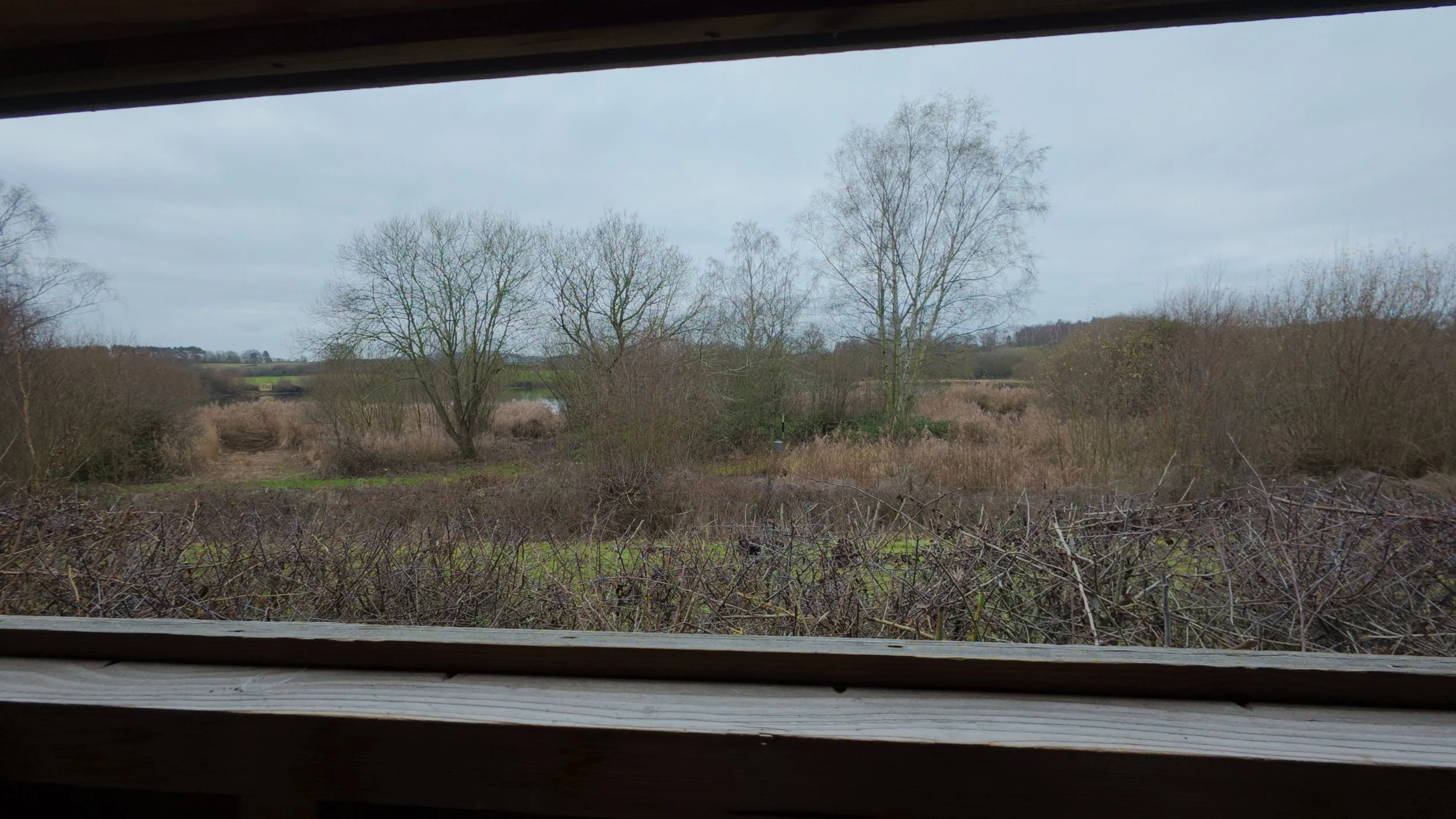
The walk to the Fen Hide, takes you down a woodland path, filled with loads of bird boxes, though on my visit, there was not much in the way of activity here. I feel that in spring, however, this part of the walk would be filled with the songs of birds, busily making nests, and looking after their young.
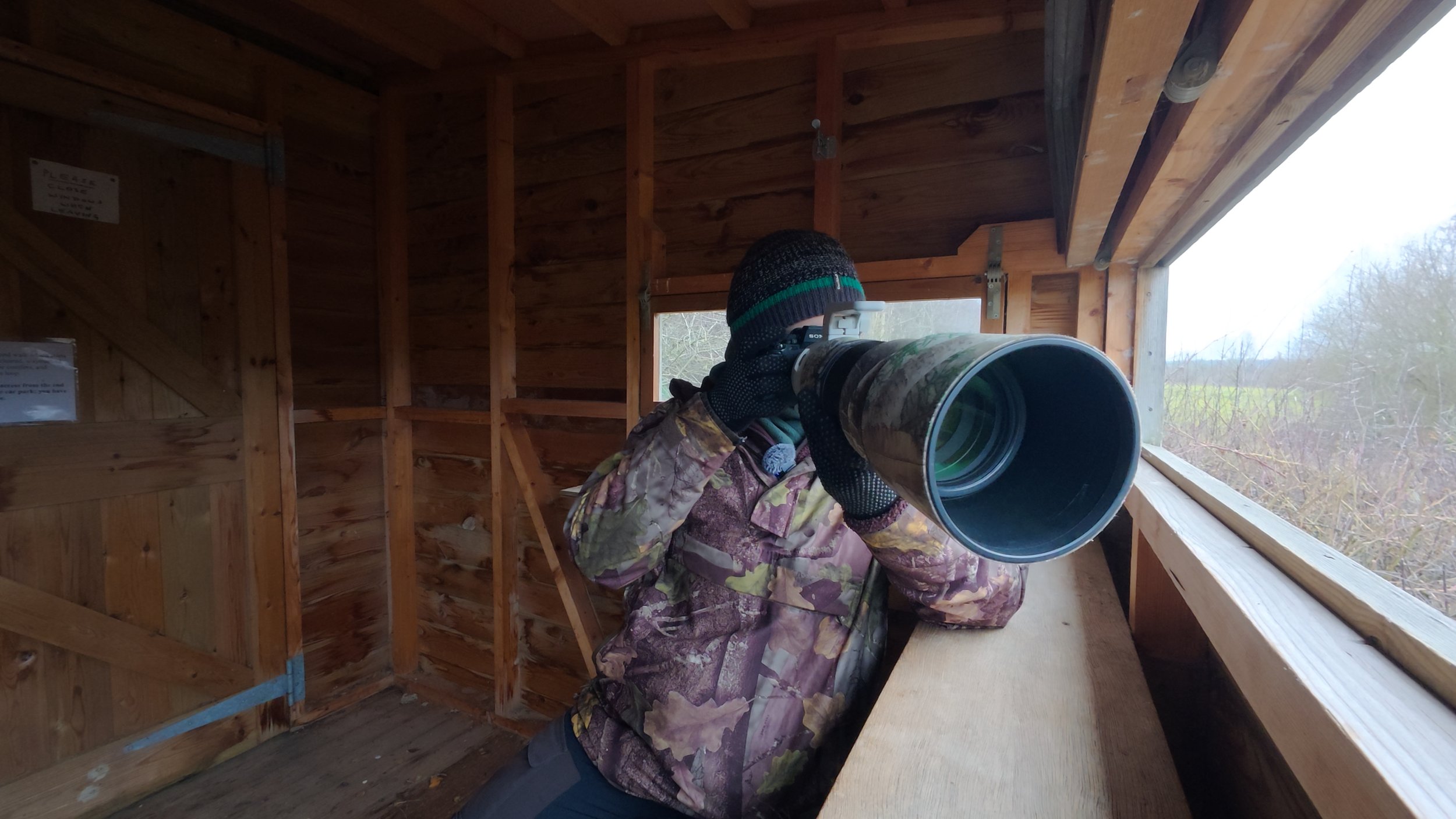
I arrived at the Fen Hide and set up, this hide overlooks the field at the back of the pond, there are some reed beds here as well as some feeders within the pond boundary (which was a bit if a way off from the hide). While here, the most notable visitor was a very bold Robin, who was intent on getting in the hide, I think it must have been fed from the hide before to be so adamant on coming inside. I did manage to get a couple of images of it, though this was a bit tricky due to how close it was. I had to move back to be able to reach my minimum focus distance on the 200-600 mm lens!
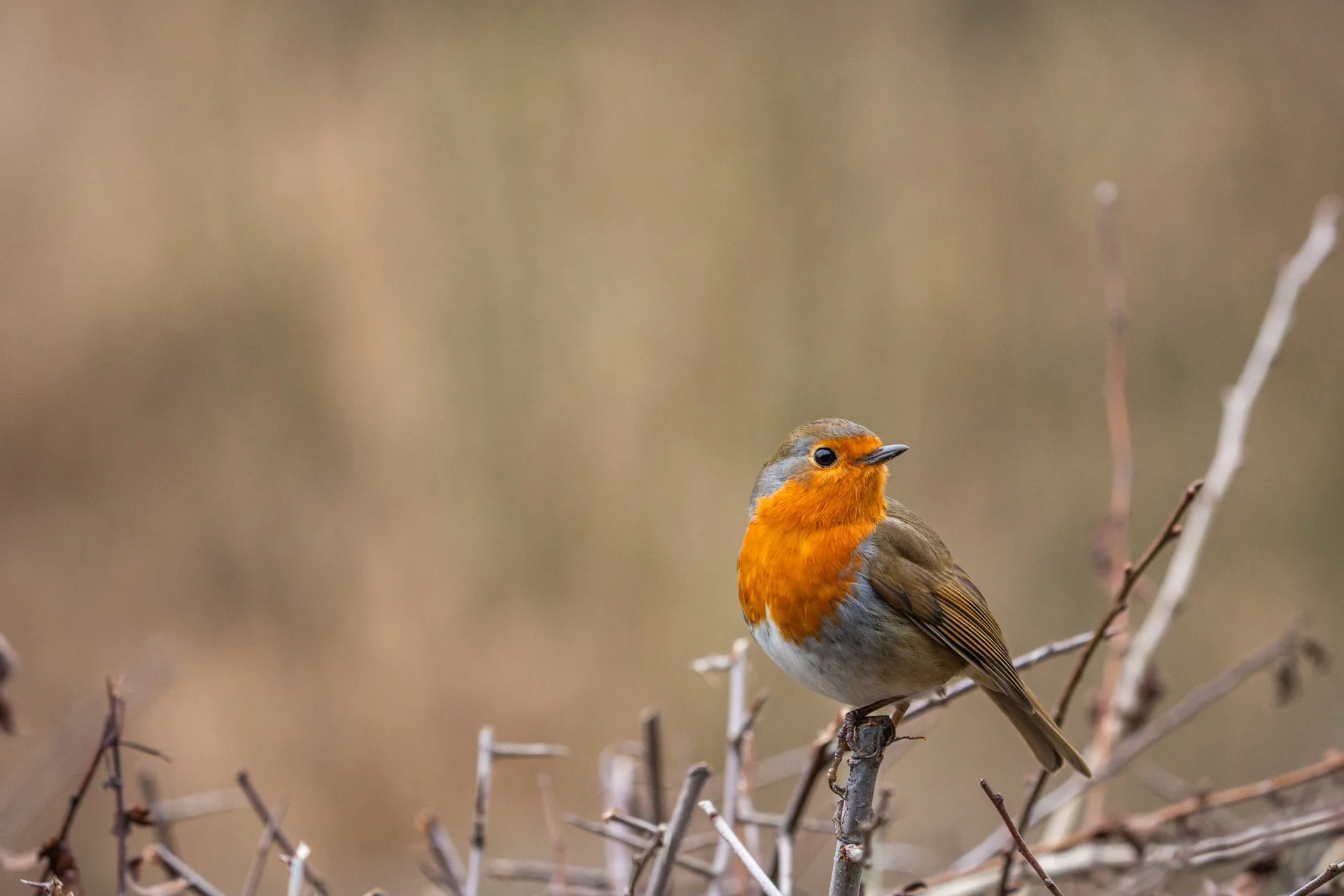
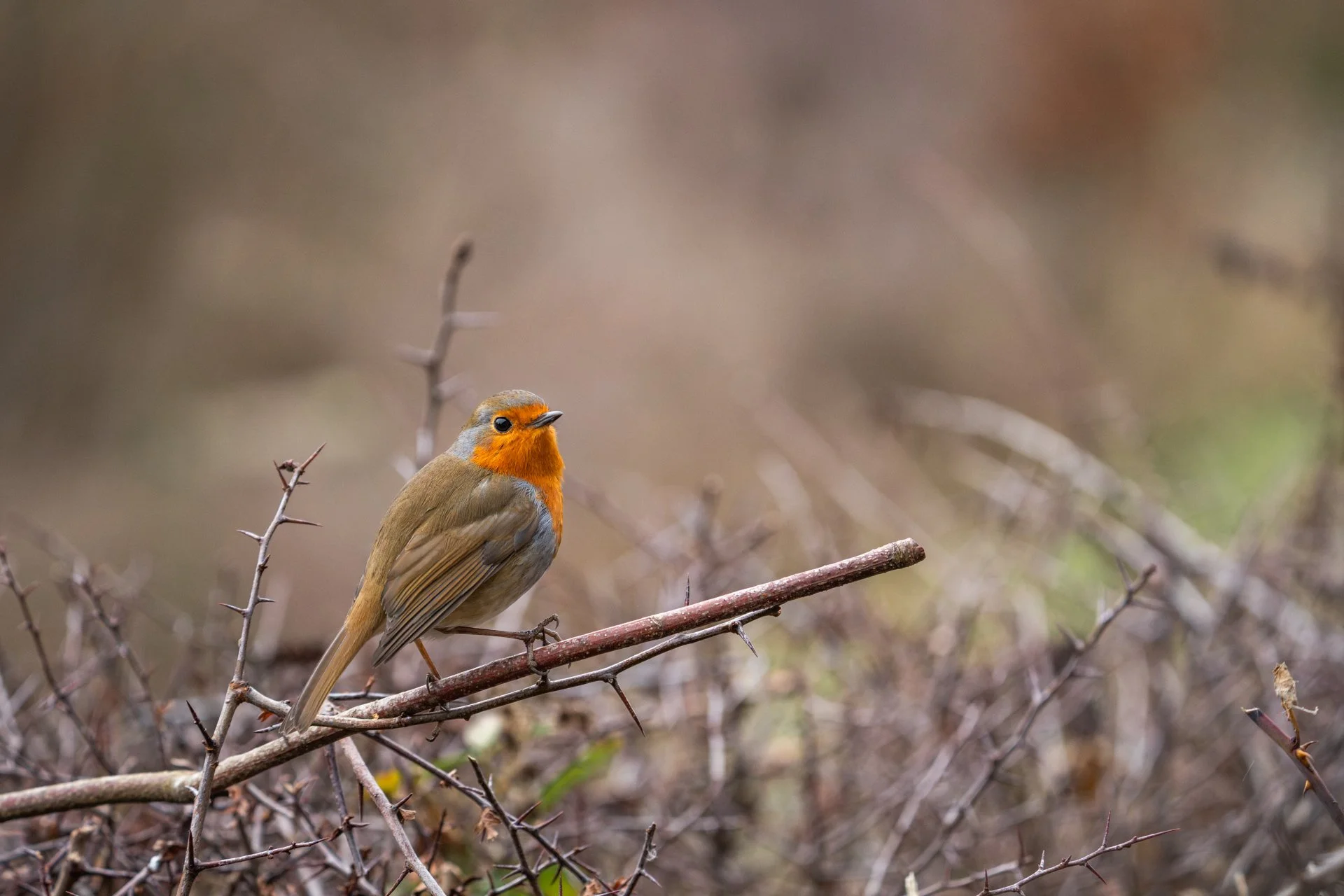
After 4 hours at the site, I decided to call it a day and head home. While I had not really had the encounters I was hoping for, I did see that Kestrel up close and got some good information on the site for my next visit. It is a shame that the pool is about an hour away from home, as it would be lovely to be able to just pop over more often to get to know the site better and increase my chances of getting to photograph some of the wonderful wildlife I know resides here.
Handy Links:
Shropshire Ornithological Society
Venus Pools Site Map
Phil’s Instagram – so you can get an idea as to what is actually at the site